
Weeknight dinners on the AGA: feeding the family Monday to Friday
Quick family meals, clever techniques, and how a modern AGA handles the reality of busy midweek cooking.
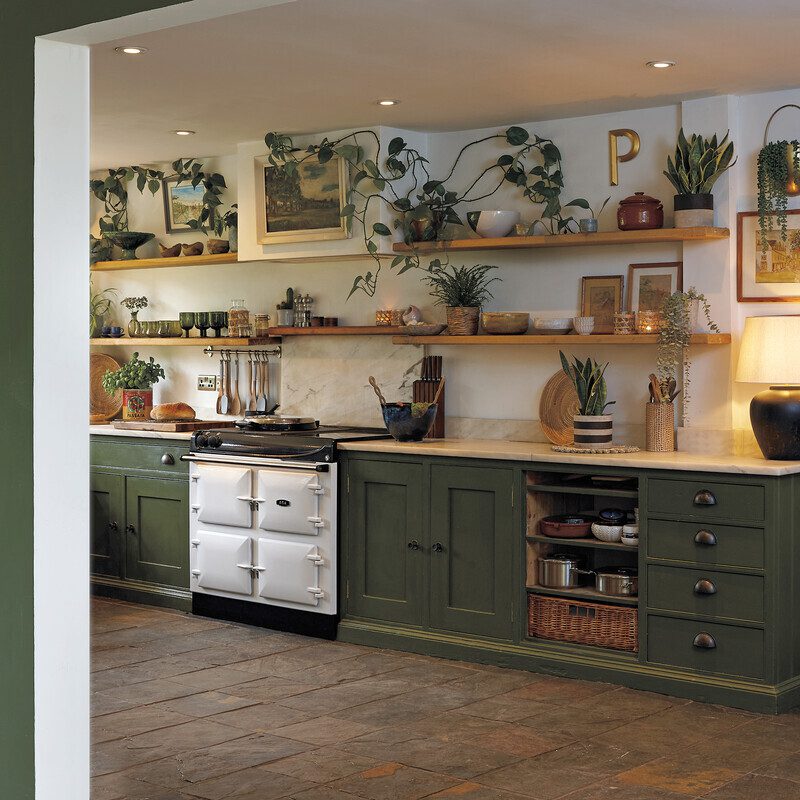
Customers often ask us whether an AGA cooker is practical for modern family life. They can picture the extravagant Sunday roast, the Christmas turkey, the slow-cooked weekend lamb. But what they're less sure about is how those quick but essential meals come together on a Tuesday night after work.
In our house, Tuesday nights look like this: three boys aged 16, 14 and 11, arriving home from school and clubs at different times between five and seven, all ravenous. Homework spread across the kitchen table, football kit in a heap by the door, the dogs doing hopeful laps of the kitchen. Dinner needs to happen, and it needs to happen quickly.
After five years of cooking on our AGA Signature (AGA eR7), this is what I'd tell anyone wondering whether an AGA really suits modern family life: the AGA doesn't just cook beautifully. It minds your dinner all day, keeps a plate of food warm and ready for whoever's home last, dries the tea towels, and somehow makes the kitchen the place everyone wants to be. For a busy family, that’s a godsend, really.
The meals we come back to
We love easy, one-pot meals, stir-fries and tray bakes. Anything involving chicken or beef mince with a bit of spice tends to get the thumbs up from the boys. At the moment we're enjoying this Gochujang chicken recipe from Jamie Oliver. It's meant to be served with cabbage, but the boys aren't keen, so I swap in mangetout and baby sweetcorn, which keeps everyone happy.
On those mornings when I’m feeling really organised and I know we’re going to have a hectic day, I'll get dinner started before I leave the house. Chicken fajitas, stews, casseroles, bolognese – they all work. The method is beautifully simple: everything just goes into a cast iron casserole, lid on, into the simmering oven, and then forget about it until I get home. You can leave it in for as long as you need. No browning first, no sweating the onions. By the time everyone piles in at the end of the day, the meat is tender, the flavours have had hours to develop, and the kitchen already smells wonderful – about the best welcome I can think of after a busy day.
One thing to remember: start with less liquid than you think you need. The AGA doesn't lose moisture the way a conventional oven does, so everything stays juicy and the flavours concentrate beautifully.
We tend to plan a few meals each week and then improvise towards the end of the week - I love getting our Riverford veg box and seeing what I can make with that and whatever's lurking in the cupboards. There's something deeply satisfying about cooking this way, and it’s often the meals that come together like this that the boys remember most. I don’t batch cook per se but if I’m making a bolognese, shepherd's pie or chilli, I usually double up and freeze half. One of the boys is a bit fussy with hot food, so it’s good to have something home-cooked ready to get out of the freezer and cook for him on the days when the rest of us have something spicy.
Julius Roberts on Instagram is another constant source of inspiration. His recipes are wholesome and seasonal, and they translate beautifully onto the AGA. If something pops up on my feed that looks good, I'll often make it that evening.
Small techniques that make a real difference
Cooking on an AGA is easier to get the hang of than people expect. It's different from a conventional cooker, but the fundamentals are intuitive, and forgiving enough that you can't easily ruin anything. Once you've been cooking on one for a while, it becomes second nature, and you wonder how you ever managed weeknights without one.
We especially love cooking directly on the simmering plate. One of our favourite end of the week dinners, when the fridge is looking sparse, is veg fritters. Just grate whatever veg you have on hand – courgette, carrots, sweet potatoes – into a bowl with an egg, some seasoning, a handful of flour, and maybe some feta if there's any about. Give it a good mix, spoon it onto Bake-O-Glide on the simmering plate with a spray of oil, close the lid, and let it cook. The result is beautiful: crisp on the outside, soft in the middle, the vegetables sweet and caramelised at the edges. We serve the fritters with a salad, a fried egg, and any leftover cooked meats. It's one of those meals that comes together as if by magic. What started as a way to use up the last of the veg box has become one of the most frequently requested meals in our house.
If there's one AGA cooking technique worth learning for weeknight cooking, it's the 7-minute rule. Bring your pasta, rice or potatoes to the boil on the boiling plate, wait seven minutes, cover the pan and transfer it to the simmering oven to finish. Nothing boils over, the hotplate is free for something else, and you're not tied to watching a pan. Everything sits happily until you're ready for it.
Then there's the warming oven, which for us is indispensable. If I've cooked earlier in the evening and someone isn't home yet, their plate goes in there and stays perfect for hours. No dried-out pasta, no cold shepherd's pie when a boy finally appears from football training, ravenous. It keeps dishes at serving temperature without drying them out.
Being ‘the house with the food’
We often have the boys' friends over, which I love. Someone told me years ago that if yours is the house with the food, yours is the house they want to be in – and I'd much rather have them at home, where I know they're safe and fed than out and about.
The AGA makes this easy. I just pop in a couple of extra pizzas or a tray of M&S chicken tenders alongside whatever I’m already cooking, and I can easily feed eight instead of five. There's always room, and nothing drops in temperature. Frozen pizza balls from Edenmoor are a brilliant mid-week shortcut. We keep a supply and pull out however many we need from the freezer. We cook them on a baking tray on the floor of the roasting oven up to R9.
What surprises people about AGA cooking
What surprises people who haven't lived with one is how capable a modern AGA is. You don't need a separate slow cooker, air fryer, rice cooker or bread maker – the ovens do it all beautifully. In winter, if the AGA is on slumber, you're only minutes away from having an AGA ready to cook on. In summer, we lean more on the hotplates and occasionally the slow cooking oven in the hot-cupboard, which puts out much less heat than the main ovens, so the kitchen stays comfortable. It's the all-in-one nature of it that I think people don't expect – and once you've lived with that kind of flexibility for a while, it's hard to imagine cooking any other way.
Ours is the AGA Signature (AGA eR7) 150-5i, with five ovens, two hotplates and an induction zone – a lot of cooker, but every bit of it earns its keep. If you're drawn to a more contemporary cooker, the AGA eRA is AGA's newest model, with touchscreen controls and an induction hob – check out our article with AGA demonstrator Naomi Hansell on what it's like to live and cook with one. And if space is tight, the AGA Mini (AGA 60) is just 60cm wide – the width of a standard oven, but an AGA through and through.
If you're weighing up the investment, our guide to AGA costs is worth a read. And we've written more about how we run our AGA through the seasons if you'd like the full picture.
Will an AGA suit your lifestyle?
Every week, Ed and I speak with customers who are trying to work out whether an AGA will fit the shape of their lives. Some have always dreamed of having an AGA in their forever home. Others grew up with one and want to recreate the feeling they remember from childhood. I can only really speak for us – but after five years, I can't imagine cooking without it.
If you'd like to talk through how an AGA might work for your family, please get in touch. Give us a ring, drop us an email, and come and visit one of our showrooms. Three generations of our family have now worked with, cooked on and lived around these cookers. We'll help you find the one that’s right for your home.


