Understanding AGA running costs in 2026
Real numbers, modern flexibility, and why today's costs might surprise you...
One of the first questions we hear from our customers is, How much does an AGA cooker actually cost to run? It's a sensible question, and an important one. An AGA is an investment, and you want to be certain you're making the right decision – not just for now, but for years to come.
If you've been researching online, you may have come across older information and heard stories about eye-watering energy bills. We understand why that would give you pause. The cost of running an AGA has changed dramatically in recent years, and what's actually possible today – with modern controllable models – is rather different and rather more encouraging than these older articles might have led you to believe.
The biggest misconception about AGA running costs
The single biggest misconception we encounter is that electric AGAs are expensive to run. This perception stems from the early 13amp electric AGAs released decades ago, which could indeed cost around £100 per week to run.
These early electric models were brilliant in their time, designed to run continuously just like traditional oil and gas AGAs. The technology has moved on considerably since then.
Modern electric AGAs work entirely differently. Today's controllable electric AGAs – the AGA Compact (AGA eR3) and AGA Signature (AGA eR7) – put you in charge of how much you spend. You can run them like a traditional AGA if you want that steady, continuous warmth and the cooker always ready, or you can use them more like a conventional range cooker, turning zones on only when you need them.
What modern electric AGAs actually cost to run
Our most popular models are the AGA Signature (AGA eR7) 150-5i and the AGA Compact (AGA eR3) 100-4i. Both offer exceptional flexibility in how you run them, which directly impacts your weekly costs.
A modern electric AGA typically costs between £20 and £30 per week to run throughout most of the year. That's with the cooker set to 'slumber' – a gentle background warmth that keeps the cast iron ready but not at full cooking temperature. When you want to cook, you turn up the ovens you need. In winter, when you're wanting more warmth in the kitchen and using the AGA more frequently, costs are typically around £25–27. In summer, when the cooker is cold except for when you're actually cooking, you're looking at around £5 per week.
It’s worth noting too that this gentle radiant heat from your AGA warms your kitchen and often further into your home, depending on your layout – warmth you'd otherwise be generating with your central heating. The simmering oven is brilliant for keeping dishes at serving temperature without drying them out, particularly useful when everyone's eating at different times. You can dry washing on the rail, warm plates, boil the kettle on the hotplate. These aren't trivial benefits when you're comparing overall household running costs.
By way of comparison, traditional oil and gas AGAs typically cost £30–50 per week to run, plus servicing costs on top – twice a year for oil, once a year for gas. With those older models, you also generally need another cooking appliance because kitchens become uncomfortably hot in summer if the AGA is on constantly.
The newer, controllable electric models offer something quite different. No servicing costs for the electric components, and in summer you simply have the AGA cold, turning on what you need when you need it.
It's worth noting that hotplates are more expensive to run if left on continuously – they can double your running costs. We recommend using them to cook and then as needed for warmth, rather than leaving them on all day. Keeping the ovens on slumber – or a slower setting on the AGA Compact models – gives you that lovely build-up of ambient warmth without the expense.
In practice
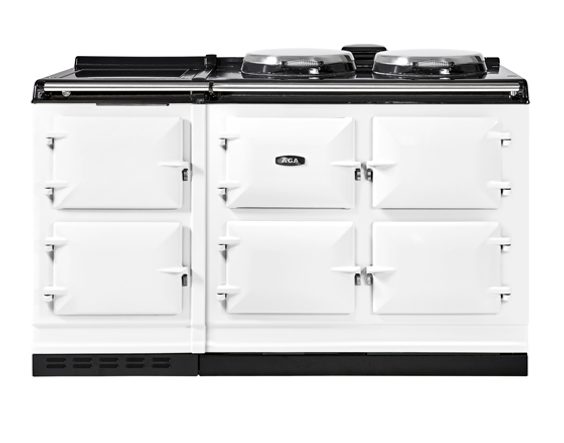
We – Caroline and Ed – have an AGA Signature (AGA eR7) in our kitchen at home. Most of the year, with the cooker sitting on slumber, it costs about £22 per week in electricity. Over Christmas and during the coldest months when we’re using it more intensively, that goes up to about £25–27. In summer, when it's cold except for cooking, it drops to around £5 per week.
AGA cookery demonstrator, Na Hansell has an AGA Compact (AGA eR3) in her kitchen. She leaves the lower simmering oven on all year round and sets the baking oven on a timer – on in the morning, off at night. This gives her the flexibility she needs whilst keeping costs manageable.
The beauty of these models is how adaptable they are. In the depths of winter, you might run yours more like a traditional AGA, enjoying that steady warmth and always-ready cooking. Come summer, you can use it exactly like a conventional range cooker. Different seasons, different needs.
The solar panel advantage
For customers who are thinking about solar panels – or who already have them installed – a modern electric AGA becomes even more attractive from a running cost perspective.
One of our customers, Lucy, installed an AGA Compact (AGA eR3) 110-3i alongside an 8kW solar panel system when she moved to the countryside. Her monthly operating costs for the AGA are virtually non-existent. The solar panels generate electricity even on bright winter days, and excess power is stored in a battery. Any surplus can be sold back to the grid through the Smart Export Guarantee.
Lucy's experience shows how an AGA can be part of a genuinely sustainable lifestyle, particularly when combined with other energy-efficient home improvements. If this interests you, we've written a detailed case study about Lucy's journey, which you can read here.
Modern AGA cooker models are also remarkably future-proof because of how controllable they are – they link easily to ground source heat pumps or solar panels.
You're in control
The fundamental difference with modern controllable AGAs is flexibility. With traditional AGAs – whether oil, gas, or those older electric models, the cooker is either on or it's off, with not much middle ground.
The AGA Signature (eR7) and AGA Compact (eR3) models give you complete flexibility. Run them like a traditional AGA in winter when you want that steady warmth. In summer, use them just like a conventional range cooker – turn on what you need, when you need it. The cooker works around your life, your budget, and your preferences.
For a breakdown of running costs by model, view our guide here.
___
We've been one of AGA's original five distributors since 1932. Three generations of working with these cookers means we understand them from daily experience, not just product specifications.
If you'd like to talk through which AGA might work best for your family, please get in touch. We're here to help. We can discuss your space, how you cook, what you're hoping to achieve – and of course, answer any questions you have about running costs.