
Slow cooking on your AGA
Caroline on the joys of slow cooking with an AGA, and a beef bourguignon recipe to enjoy this autumn.
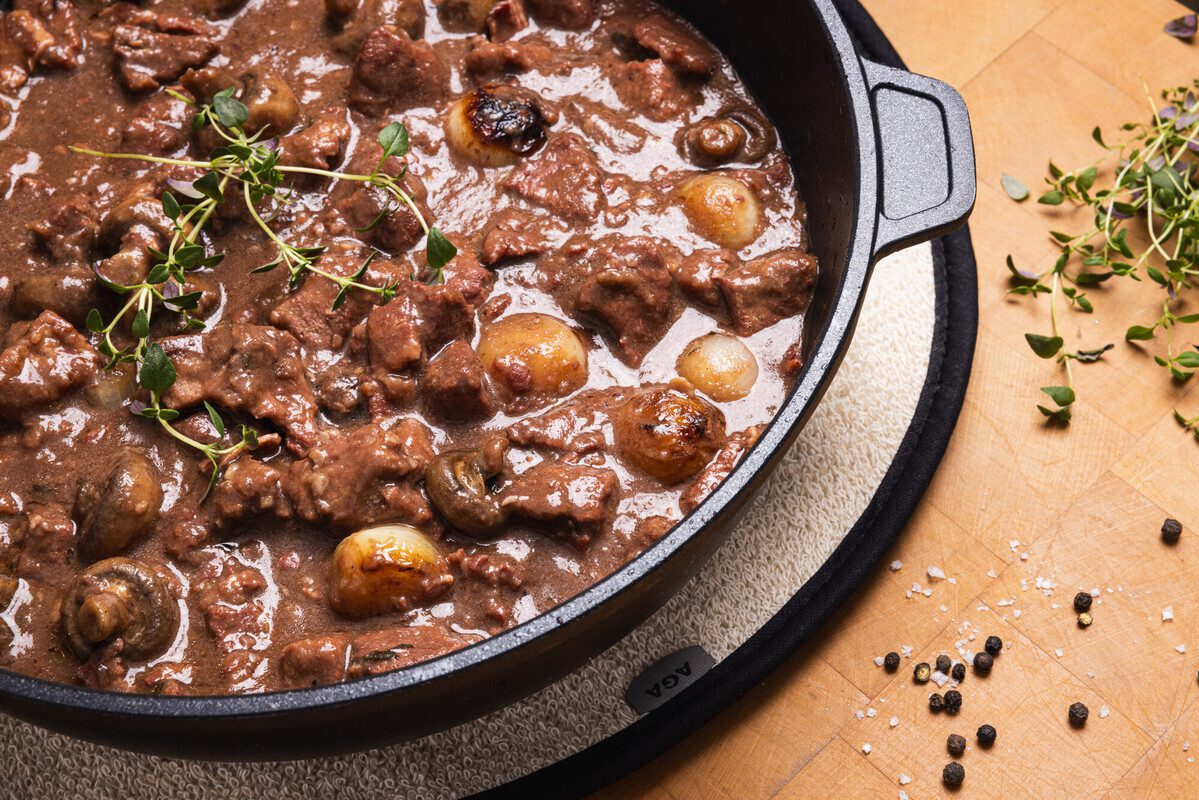
One of the great pleasures of living with an AGA is slow cooking – and it's something these cookers do very well. You can get a casserole going after lunch, and it needs little more attention until supper time. There's nothing quite like coming in from a chilly Sunday afternoon dog walk to a warm kitchen and the smell of something wonderful, so today I thought I'd share how it all works, with a beef bourguignon as an example.
People who are considering an AGA sometimes worry that they’ll need to learn to cook differently, and I understand that concern – although most people find an AGA much easier to get the hang of than they expect. It's different from a conventional cooker, but it's intuitive and very forgiving, and becomes second nature before long. And when it comes to slow cooking, there's very little you can do wrong.
The simmering oven is one of the three cast iron ovens on our AGA Signature Induction (eR7i), and getting the best from it couldn’t be simpler. There’s no temperature to set – it holds one low, steady heat, roughly 110–120°C, all day long. The heat comes from the cast iron walls of the oven, not from a fan, so it reaches the pot gently and evenly from every side. Very little of the liquid evaporates, so none of the flavour is lost and the food stays moist and tender.
The one thing to remember is that the simmering oven keeps food cooking but shouldn't be used to heat anything up from cold. AGA calls it a continuation oven. So a casserole should come up to the boil on the hotplate first, and a joint of meat goes into the roasting oven for half an hour or so. After that it can go into the simmering oven and stay there for hours, with no stirring and no checking.
Beef bourguignon
This isn't so much a precise recipe as a method. You'll need about a kilo of stewing steak cut into generous chunks, some pancetta or smoked lardons, garlic, a bay leaf, a few sprigs of rosemary and thyme, a couple of glasses of red wine and half a pint of beef stock.
Now, you can either simply throw everything in the casserole and pop it straight in the simmering oven, or, if you fancy making it extra special, you could first brown the meat. To do so, start by tossing the beef in seasoned flour. Heat some oil and butter in a large cast iron casserole on the boiling plate and brown the meat in batches, giving the pieces room to fry properly.
Remove the meat and set aside. In the same pan, fry the pancetta and garlic for a minute or two. Next, the beef goes back into the casserole with the herbs, followed by the wine and stock. (You'll use less liquid than you might be used to with a conventional oven, because so little evaporates in the simmering oven.)
Give the bottom of the pan a good scrape as it comes up to the boil – the dark, sticky bits there are where a lot of the flavour comes from. Let it bubble away on the simmering plate for five minutes, pop the lid on, and then move the casserole to the shelf of the simmering oven.
You can leave it in there for the afternoon – three hours or so is about right. We'll quite often take the dogs out at this point, and when we get back, we're hit by the smell – delicious. Before we serve, I fry some small onions in butter and stir them through, then leave everything in the oven for another half hour or so.
When we're ready to eat, I take the casserole straight to the table, often with a big bowl of buttery mash and some greens, and let everyone help themselves. The smell has been filling the house all afternoon and by supper time, nobody needs to be called to the table twice.
How it compares with a conventional oven
Of course, you can make a good bourguignon in any oven. A fan oven set to around 140°C will take about the same time. More of the liquid evaporates, so most recipes ask you to check it part-way through and top it up if it needs it. An electric slow cooker also cooks at a low heat for hours, but with most of them you'll need to brown the meat in a separate pan before adding everything to the pot. On the AGA it all happens in one place. The meat is browned and slow cooked in the same casserole, and there's next to nothing to wash up.
__
If you'd like to talk through how an AGA might work for your family, we're here to help. Give us a ring, send us an email, or come and visit one of our showrooms. Three generations of our family have cooked on and lived around these cookers, and we'll help you find the one that's right for you.
If you’re keen to try more slow cooking recipes on your AGA, you might enjoy this piece on slow-roast lamb, or this one on veg box cooking. For evenings when you need something quick, read our article on weeknight dinners on the AGA. And do sign up to our newsletter using the form below – we’ll be in touch every three weeks or so, with seasonal recipes, AGA tips and the occasional family story.


