
At the heart of the home: the story of the AGA kitchen
The AGA kitchen is a quintessentially British thing, as much a part of the country house as flagstone floors and wellies by the door. Which makes it all the more surprising that the AGA isn't British at all. We share the whole story, from a Swedish workshop to the Shropshire foundry it's made in today.
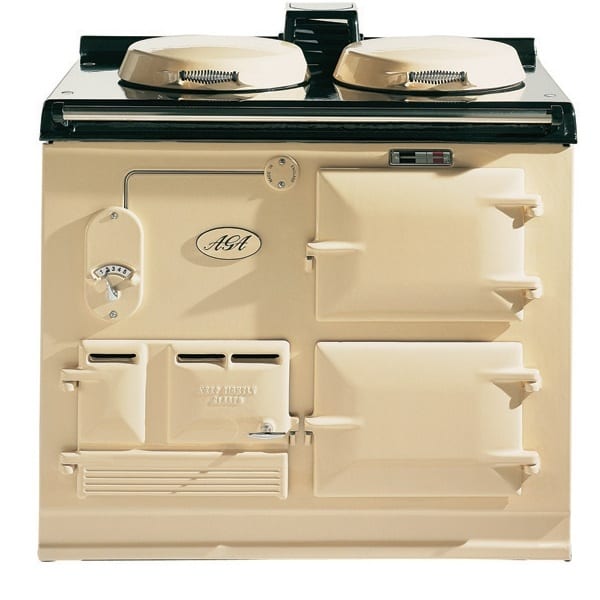
An AGA is less an appliance than a way of living. Walk into an AGA kitchen and before your coat is off, before anyone has said a word, you feel it. That particular gentle, comforting warmth. However lovely the rest of the house, people drift toward the AGA and linger, the way cats find the one patch of sun. It’s a natural focal point: a warm, characterful centrepiece that makes a kitchen feel lived-in and loved. More than anything, an AGA is an investment in how a home feels.
We've worked with these cookers for a long while. Since 1932, to be exact, when Edwards & Godding became one of AGA's five original distributors. Three generations of the family have cooked on them, sold them and serviced them for customers across Oxfordshire, Berkshire, and the South East and South West of England.
It’s a quintessentially British thing, the AGA kitchen, as much a part of the country house as flagstone floors and wellies at the front door. Which makes it all the more surprising that the AGA isn't actually British at all.
Where the AGA began
It’s Swedish. (Of course it’s Swedish!)
The AGA was invented in 1922 by a man called Gustaf Dalén, who headed the gas company that would lend the cooker its name, and who had already won the Nobel Prize for his work on lighthouse regulators. An explosion during a safety experiment in 1912 had left him blind, and from home he became painfully aware of how hard his wife Elma worked over a range that was dirty, demanding and slow. Though he could no longer see, he set about building her something better, his family helping to test each version as it took shape.
What he built was a single cast-iron cooker that held onto its heat and used it gently all day long: for cooking, certainly, but also for warming water and drying the washing. One steady source of warmth, doing the work of several different appliances. He named it after the Swedish gas company he ran, the Aktiebolaget Gas Accumulator, and from those initials the AGA was christened.
How the AGA came to Britain
AGA cookers arrived in Britain in 1929, and by 1932 Edwards & Godding were one of just five distributors in the whole country chosen to sell it.
The cooker took hold through the 1930s, helped along by a young salesman named David Ogilvy, who spent those years selling AGAs door to door. He poured what he learned into a slim book, The Theory and Practice of Selling the AGA Cooker, still held up today as one of the finest sales manuals ever written. Ogilvy went on to become one of the most celebrated advertising men of the century, and his little book helped turn a curious Swedish import into a fixture of the British kitchen.
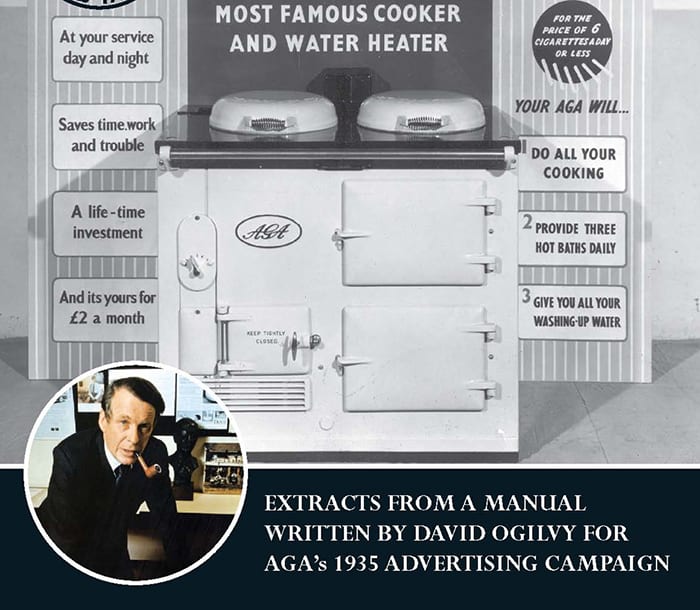
Demand grew further through the war years, when AGAs were called into service in hospitals, munitions works and community kitchens to help keep the country fed. By the late 1940s the waiting list ran to six months and more. In 1947 production moved to Shropshire, and that is where AGAs have been made ever since.
How the AGA changed with the times
The earliest AGAs ran on solid fuel, and through the decades that followed they were offered on oil and gas, as households changed and people wanted something cleaner to live with – less soot, more ease. The first electric AGA arrived in the 1980s, a real turning point, as it needed no flue and opened the cooker up to kitchens that could never have taken one before.
Today's AGAs are electric, and with that change has come much more flexibility and control. That old idea – that an AGA must roar away day and night, summer included, whether you want it or not – is simply not true any more. Each oven, each hotplate, works on its own now. Run it like a traditional AGA through the winter for that steady, room-filling warmth. Come summer, switch on only what you need, when you need it, much as you would any range cooker.
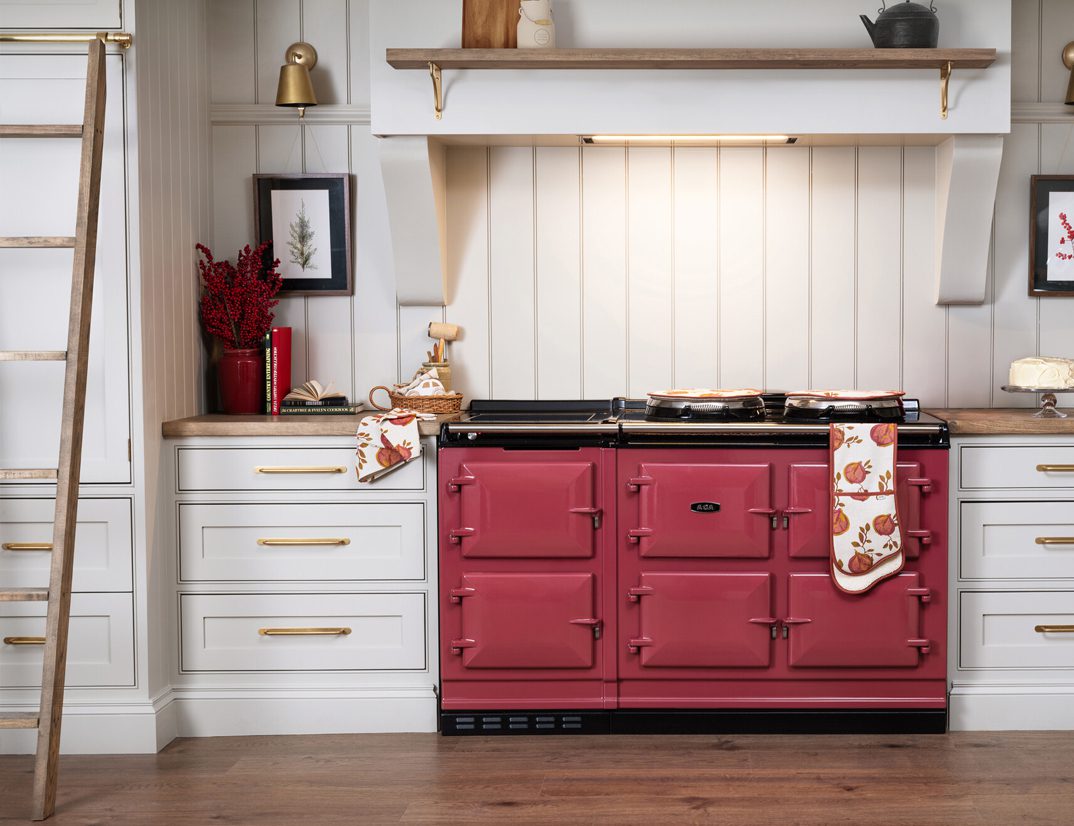
Why Every Kitchen Can Be An AGA Kitchen
People often picture the AGA in a rambling farmhouse, but the range has grown to suit almost any home. The AGA Mini measures a mere 60cm across and still gives the same cast-iron heat as its bigger siblings – perfect for a smaller kitchen or city flat. The AGA Compact is much like the traditional AGA in look, but a little shallower from front to back, so it sits flush within standard-depth kitchen units rather than projecting into the room – a neat fit if a full-depth AGA would stick out too far.
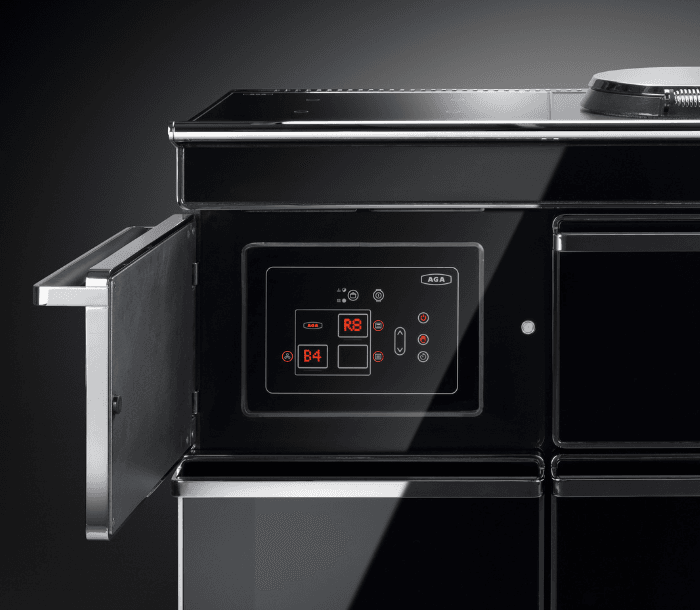
When it comes to a full-sized AGA, the choice really comes down to how you like to use your cooker. The AGA Classic and the AGA Signature are the same handsome cast-iron, and they cook in exactly the same way: the difference is in the controls. The Classic, formerly the R7, is the closest thing to the original AGA, designed to be always on and ready whenever you need it, with four temperature settings (including an eco-mode). The Signature offers a touchscreen for setting precise temperatures and ovens you can programme around your day: on for the morning, off while you are out, on again in time for dinner. If you love the traditional, always-ready AGA and want uncomplicated control, the Classic is the one. If that extra flexibility appeals, the Signature is the one – and it's what we have at home. Ours is the induction version, with an induction hob and conventional oven alongside the cast-iron ones. We’ve written more about how we run ours throughout the year.
And if your taste runs more contemporary, the AGA ERA is the most modern of the family – beautiful in glass and chrome, and a natural fit for a modern kitchen.
Then we come to colour. AGA cookers are available in a wide range of shades, from quiet heritage tones to bold colours to design a room around. Choosing the perfect colour for your home is a real pleasure, and if you would like a hand narrowing it down, we have written a whole guide to choosing the perfect AGA colour for your kitchen.
These cookers last for generations. In 2009, The Telegraph went looking for the oldest AGA still in daily use, and the winner installed back in 1932 and still going strong. An AGA settles into the heart of the house and quietly becomes part of the family.
That is what we have spent the best part of a century helping families find: not just a cooker, but the warm centre a home is built around. If you would like to see the current range for yourself, and talk it through with people who have been doing this rather a long time, we'd love to hear from you and to welcome you to one of our showrooms in Reading or Woodstock. Simply get in touch.


